On most vessels, operational knowledge lives in the crew, not the vessel. When the chief engineer leaves, a year of fault history, supplier context, and system understanding leaves with them. The next engineer inherits equipment, not context.
Two days of verbal briefing, half remembered. A Word document written at 1 a.m. on the last night. Which valve sticks, the trick that frees it, which supplier had the right part, all in the head of someone who just walked down the gangway.
End the loss →When the chief leaves, the handover already exists. Watch it assemble.
Season 2025–26 · 214 records across 3 departments. 3 items require critical attention.
Critical Port engine: high coolant temperature. Reading climbed under load off Sardinia; traced to a hose-clip failure on the raw-water return, re-clamped and flow restored. Await inspection parts from the Cat dealer before the next…
Name your vessel. Type three recent jobs the way you'd say them out loud: no format, no structure. We send back a handover pack assembled from your entries, sealed like the real thing. Yours, not a generic demo.
Get a sample pack →Plain English in. Structured, grouped, signed-ready pack out, by email.
Every line in that pack links to a live record, and every action leaves a trace that cannot be altered.
You left WO-1042 half-finished on Tuesday. Open it Friday and the trail shows exactly where you stopped, what you touched, and what moved while you were ashore. Hop back into your own work the way you'd reopen a tab.
Every action you take is timestamped and sealed. Pick up exactly where you stopped.
Every action, fault, handover, work order, signature, is sealed into a cryptographic receipt that anyone can verify at verifier.celeste7.ai. Export critical proof when it matters.
The audit trail is not big-brother. It is a legal defence.
Get provable records →Eleven months later, the raw-water pump fails, and the captain asks: "prove it."
When the surveyor asks, you don't assemble the answer. You open it.
And finding any of it takes one question.
One bar. Every record on the boat: work orders, faults, documents, parts, and the Outlook email where the supplier context actually lives. At 2 a.m., nobody opens a dashboard.
Impeller replaced. Recommend checking hose clips at next service. T. Walsh, signed
Four months later, F-2847's root cause was hose clip failure. The fix was recommended in November. It was findable the whole time.
Open that record, and the system surfaces what nobody linked.
A note added to a record. A photo title typed at upload. A line inside a generated handover. All of it is indexed the moment it's written, and Show Related surfaces every entity that touches the same context. No tagging. No filing discipline.
"You actually built it. This is the Bitcoin in 2009."
Once one person finds something, everyone finds it, forever.
Crew find documents the way they always have: ask whoever was here last, hunt the filing cabinet, scroll a folder named by an engineer four chiefs ago. The file exists. Connecting it to the work in front of you is the labour. That labour is gone.
Accept once. Everyone after you inherits it.
Today: someone moves a file. The next engineer spends twenty minutes finding it, learns the new location, and keeps it in his head, because there's nowhere else to put it. The next crew starts the same twenty minutes from zero. Every rotation pays the same cost again.
Here, the curve inverts. Crew execute once, everyone learns. Every find, every accepted document, every note compounds: the vessel gets sharper with every rotation instead of resetting.
The same instinct, the check you'd forget to do, also finds money.
Log the fault. If the equipment is still covered, the record says so, before the purchase order goes out. One click opens the exact document, clause cited, claim pack assembling from the ledger. You decide whether to claim.
One denied claim runs €20k to €100k. The PMS holds the warranty date. It never connects it to the fault you just logged.
Submit the fault. The warranty check runs with it, before the purchase order goes out.
Equipment commissioned 14 Aug 2024 aboard MY Celeste.
§4.1 · Parts and labour are covered for twenty-four (24) months from date of commissioning.
Getting there doesn't take a project plan, either.
Your existing manuals, PDFs, scans, exports, and emails are indexed as they are. No migration projects. No reformatting exercises. The vessel's record becomes searchable immediately.
Nobody to hire. Nobody to fly to the boat. No six-week setup with a consultant in the engine room. The archive indexes as it lands.
Register. Export. Search. The record is searchable, day one.
And none of it asks you to replace the system you already run.
Seven primary operational domains, each backed by a full entity card: identity, linked records, audit trail, notes. The spine of your system.
Plus the four things you wouldn't: handover generation, immutable audit trails, cross-domain search, fleet view, built into the same record, not bolted on.
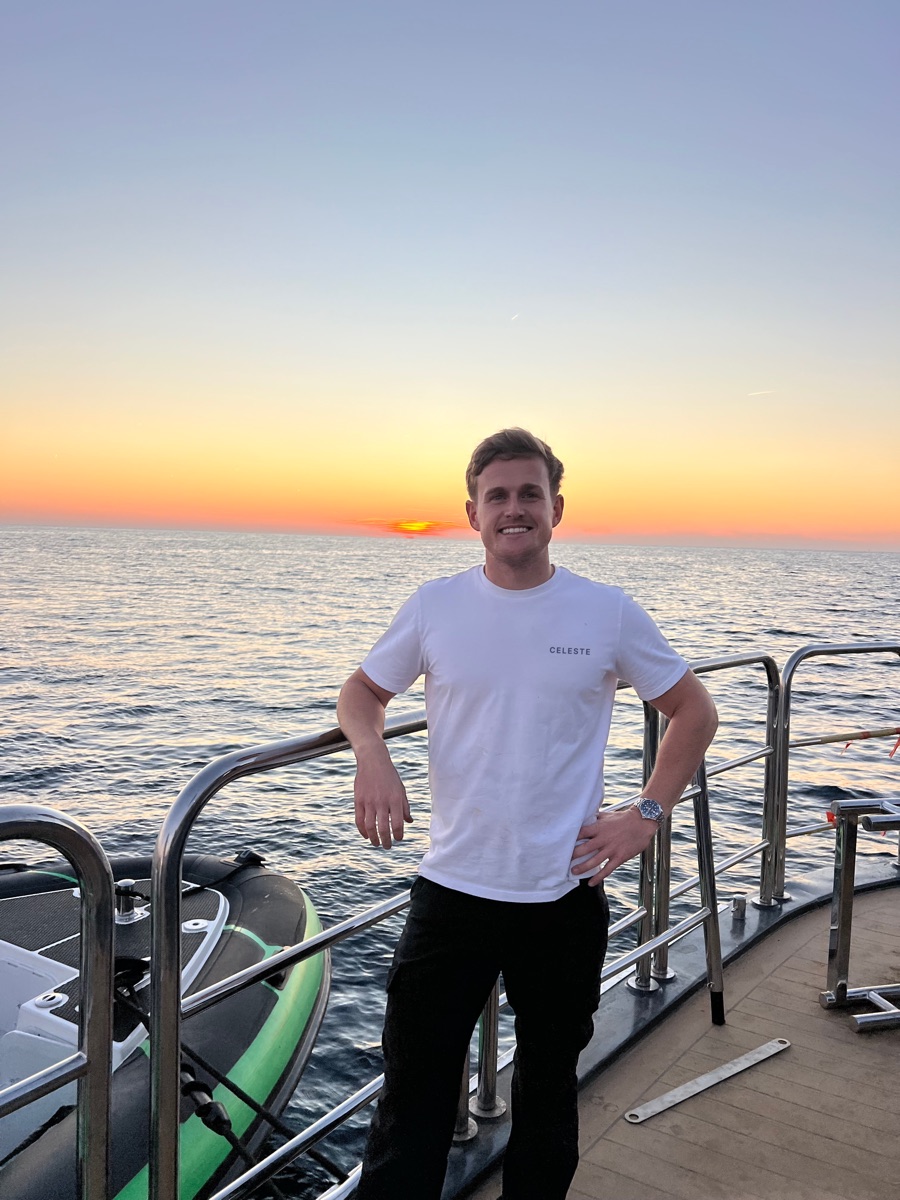
Alex Short spent years as an Electro-Technical Officer (then Head of Department) on superyachts up to 125 metres, among them Maryah, Legend, Freedom, Nero and Whisper. He inherited vessels mid-rotation and watched operational knowledge walk off the gangway with every handover. CelesteOS is the system he wished existed at that moment.
"CelesteOS was built with one thing in mind: a vessel should never lose what its crew knows. It takes the standing aches every crew has learned to call normal, and removes them."
EU data processed in the United States under SCCs and UK IDTA. DPA available on request.
Controls built against AICPA Trust Services Criteria. Audit not yet commissioned.
Sections 10 and 11. Audit evidence, not class approval.
Full regulatory mapping including MLC 2006 and IMO MSC.428(98) → /trust
A controlled pilot programme: dedicated setup, data import, and a direct line to the engineering team. You don't start from zero: we import your equipment register, certificates, and work-order history. And CelesteOS lives adjacent to your PMS: it stays exactly where it is, the crew keeps working in it, and the record builds alongside.
Unlimited seats. No per-module tiering. Per vessel, not per user. Pilot rate, locked for 12 months from go-live.
One denied warranty claim runs €20k–€100k. This is about €11k a year, roughly 1% of what a 40m costs to run. The standard rate is higher. Pilot vessels keep this one.
One-time onboarding (your equipment register, certificates and work-order history, imported for you): waived for vessels that book a pilot call. The monthly rate is never discounted.
Book a 20-minute pilot call →Nobody calls you unless you ask. Vessels that join a call keep the onboarding waiver.
Private and charter vessels from 30m, no upper limit. Where operational knowledge currently lives in crew minds, not the vessel.
500+ from across the fleet follow the build.