The system that connects the dots
An engineer diagnoses a fault on the port watermaker. Membrane degradation, identified during routine checks. The repair takes two hours. The engineer moves on to the next task.
Three months later, the same fault occurs. A different engineer handles it — the first engineer rotated off six weeks ago. The new engineer logs a fresh defect, orders the same membrane, performs the same repair.
Nobody connects the two events. The fault record from three months ago exists in the defect log. The parts used exist in the inventory system. The work order exists in the maintenance module. But no link connects them. The pattern — the same failure, the same equipment, a possible supplier batch issue — is present in the data. It is invisible because the data lives in separate domains that do not reference each other.
The record that would have prevented the repeat — a linked chain from fault to work order to parts to equipment — was never made. Not because the engineer was negligent. Because making that connection required navigating to four separate modules and manually creating the links. Under operational pressure, that administrative overhead is the first thing deferred.
The admin burden that engineering absorbs
On a vessel with a conventional planned maintenance system, the act of recording work takes longer than the act of doing work.
An engineer completes a repair. Then enters the fault closure in the defect log. Then deducts the parts from inventory. Then updates the work order in the maintenance module. Then revises the equipment record. Then adds a note to the handover document. Each entry is a separate task in a separate module.
This administrative overhead is the reason records are incomplete on most vessels. Deferred logging becomes incomplete logging. Incomplete logging becomes the documentation gaps that deny warranty claims, hide fault patterns, and produce handovers that omit critical context.
The problem is not that engineers are unwilling to keep records. The problem is that connecting information across domains requires more effort than it should.
The system notices. The engineer decides.
Cross-domain actions are system-initiated suggestions that connect the current task to related records in other domains — at the moment the connection is relevant, without the engineer navigating to those domains.
Fault logged — "Create work order?" The engineer logs a fault on the port watermaker. The system recognises that a fault without a work order is an open loop. It offers to create the work order — pre-populated with equipment reference, fault description, and department. One confirmation.
Work order created — "Check parts inventory?" The work order exists. The system identifies the equipment and surfaces the parts typically associated with membrane replacement. Current stock level shown. If the membrane is not in stock, the last supplier and order history appear. No inventory module navigation.
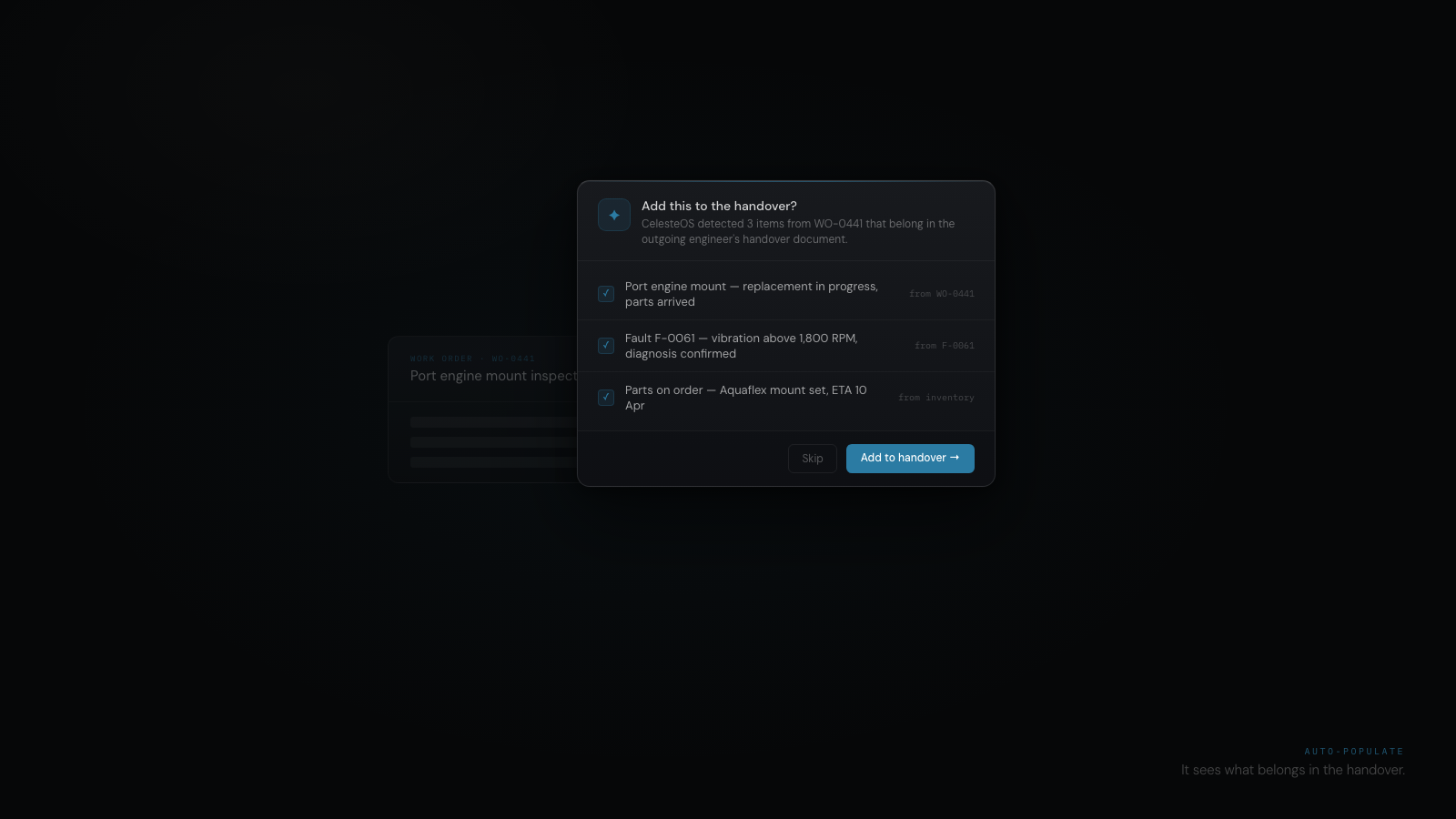
Fault with work order — "Add to handover draft?" The fault has a work order. Parts are on order. The system offers to add this item to the current handover draft — pulling fault summary, work order status, and parts status into a single handover entry. The departing engineer does not need to remember to update the handover. The system proposes it at the moment the information is created.
Each action is one click. Each action connects domains that would otherwise require separate navigation. Each action is confirmed by the engineer — the system proposes, the engineer decides. Nothing executes without explicit consent.
The admin work that engineering should never have absorbed
When cross-domain actions link records at the point of creation, four categories of administrative work disappear.
Duplicate entry. The fault description is written once. It populates the work order. The work order populates the handover item. The engineer does not type the same information three times.
Manual cross-referencing. The incoming engineer does not need to search the fault log, then the maintenance module, then the parts inventory to understand a repair. The records are linked from creation. Following one record leads to every connected record.
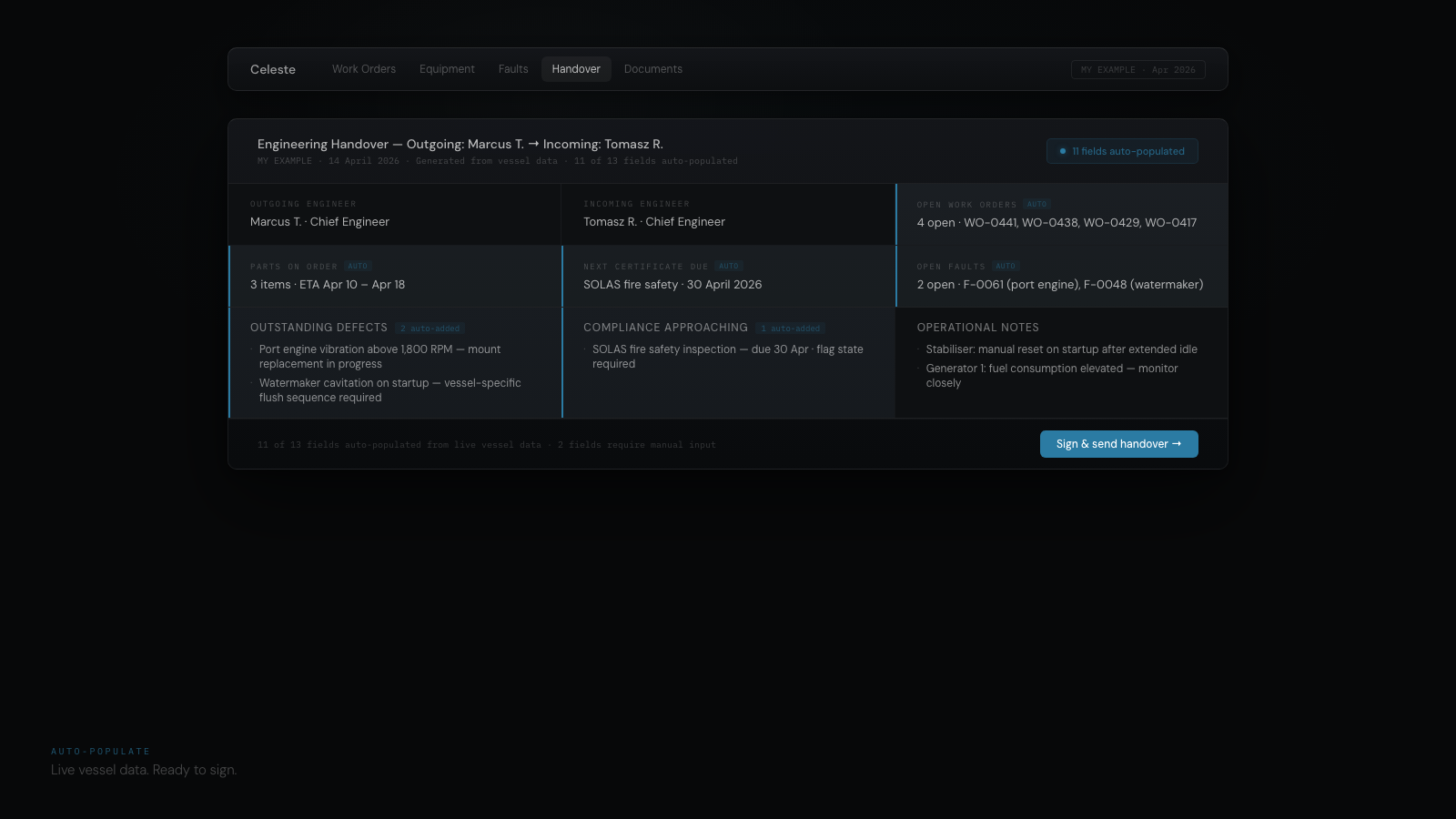
Forgotten handover items. Items are added to the handover draft at the moment they are created — not retrospectively from memory under time pressure. The handover assembles itself as the engineer works.
Orphaned records. A fault without a work order. A work order without parts. A repair without a handover entry. When connections are proposed at the point of creation, orphaned records become the exception rather than the norm.
How cross-domain intelligence works
CelesteOS is a Maritime Technical Intelligence System for superyachts that sits alongside the vessel's certified PMS. It captures the operational layer that maintenance systems cannot — observations, context, handover notes, supplier correspondence. As crew work, the system identifies connections between domains and proposes actions.
The system does not auto-execute. Every action requires the engineer's explicit confirmation. In regulated maritime operations, every record must be attributable to a named individual who decided to create it. Auto-execution removes attribution. CelesteOS preserves human judgment while eliminating the friction that causes engineers to defer record-keeping.
After 90 days of use, record completeness improves — not because crew were instructed to be thorough, but because the system made thoroughness the path of least resistance. The admin burden decreases. The documentation quality increases. Both happen because connecting records is now one click instead of four modules.
The best admin system is the one where doing the work is the admin
Records are incomplete on most vessels because connecting information across domains requires more effort than creating it. When the system proposes the connections, the engineer confirms them, and the records link themselves — the admin work disappears into the work itself.
Structured pilot programme
CelesteOS is running a structured pilot across a limited number of vessels. If you manage vessels and want to see how cross-domain intelligence works in practice, we should talk.
contact@celeste7.ai →